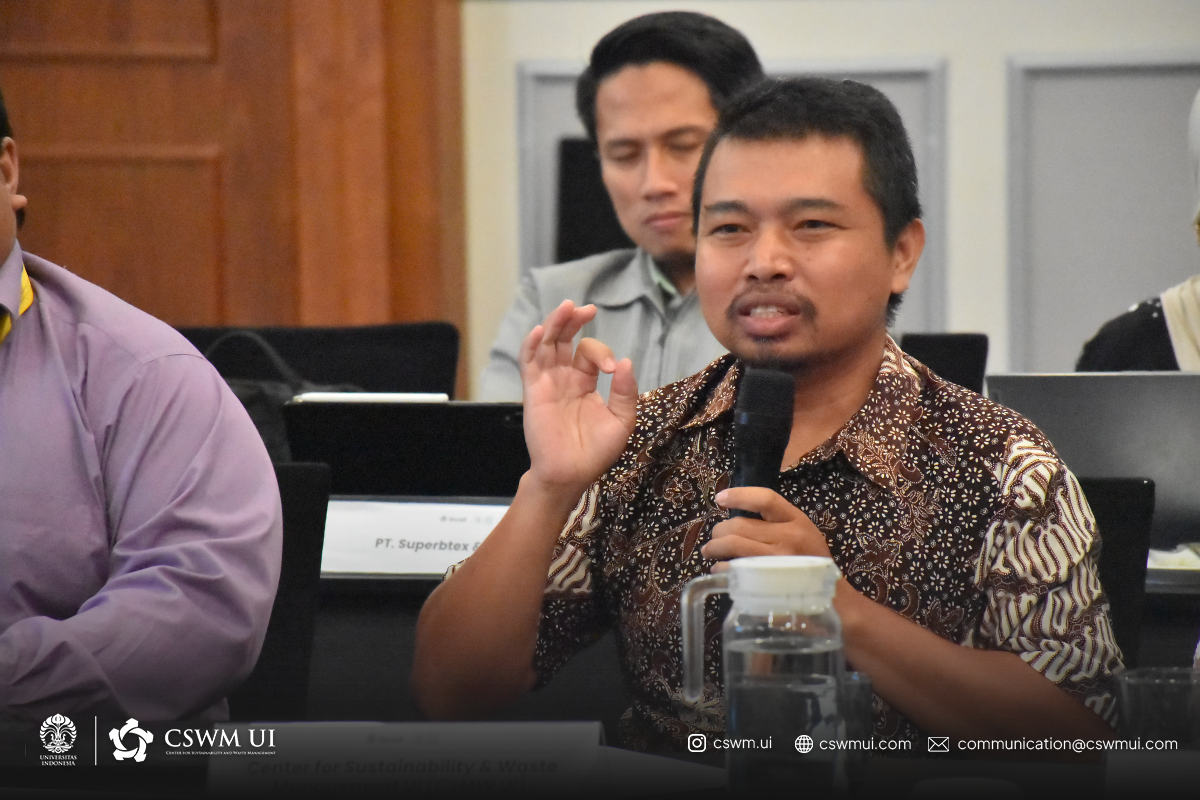
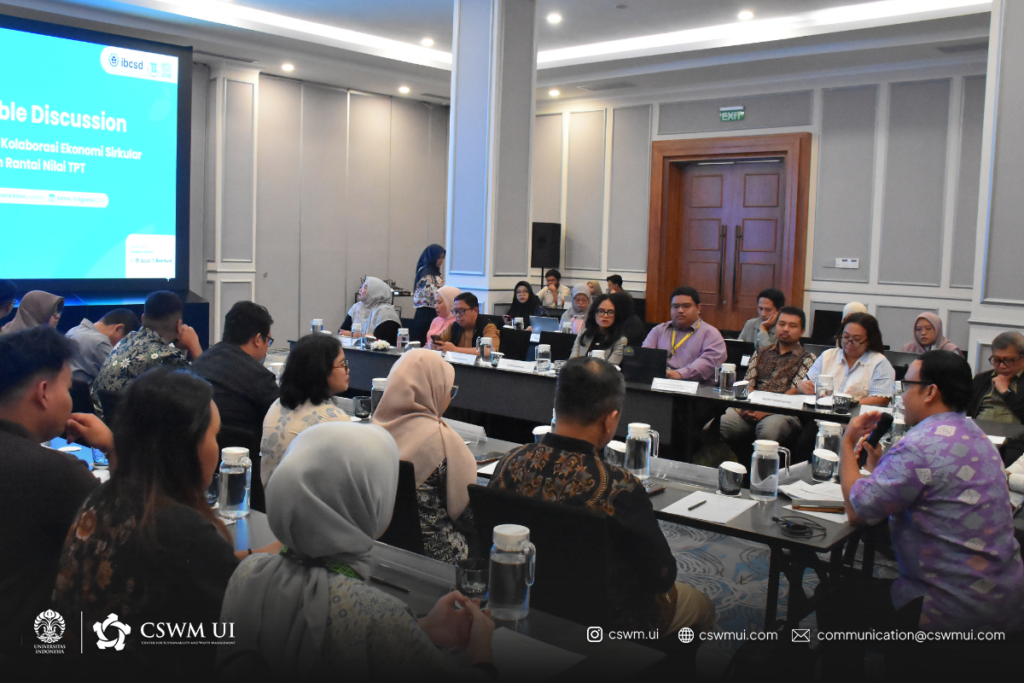
Jakarta, 13 August 2026 – Center for Sustainability and Waste Management Universitas Indonesia (CSWM UI) participated in a multi-stakeholder forum organized together with the Ministry of Industry of the Republic of Indonesia, Indonesia Business Council for Sustainable Development (IBCSD), and Rantai Tekstil Lestari.
Representing CSWM UI in the forum were Rico Ricardo Lumban Gaol and Peter Satria Abadi, who contributed perspectives on waste management, material recovery, and the development of a more integrated circular textile ecosystem in Indonesia.
The forum brought together more than 20 stakeholders representing different parts of the textile and textile products value chain, including producers, recyclers, potential offtakers, industry associations, and think tanks. The discussion focused on identifying key barriers and opportunities for establishing a collaborative platform to support circularity within Indonesia’s textile industry.
One of the main discussions centered on the need to view textile circularity as an interconnected value-chain issue rather than solely as a waste management challenge. The availability of secondary feedstock, effectiveness of collection and sorting systems, recycling capacity, operational costs, manpower requirements, and market demand for recovered materials all influence whether circular practices can function effectively at an industry scale.
CSWM UI emphasized that the development of a circular textile framework must consider the technical, operational, and economic realities faced by stakeholders across the value chain.
The forum also examined international applications of Extended Producer Responsibility (EPR) and Producer Responsibility Organizations (PROs) as references for developing collective mechanisms that can support recycling, financing, traceability, and coordination among industry stakeholders.
The initiative forms part of a broader effort to gather industry perspectives and strengthen the policy foundation for Indonesia’s transition toward a more circular industrial system.
Through its participation, CSWM UI continues to support collaboration between government, industry, academia, and other stakeholders by providing evidence-based perspectives on waste management, circular material flows, and ecosystem development.
Moving forward, CSWM UI remains open to collaboration and further dialogue to support the development of an inclusive and effective circular textile ecosystem in Indonesia.