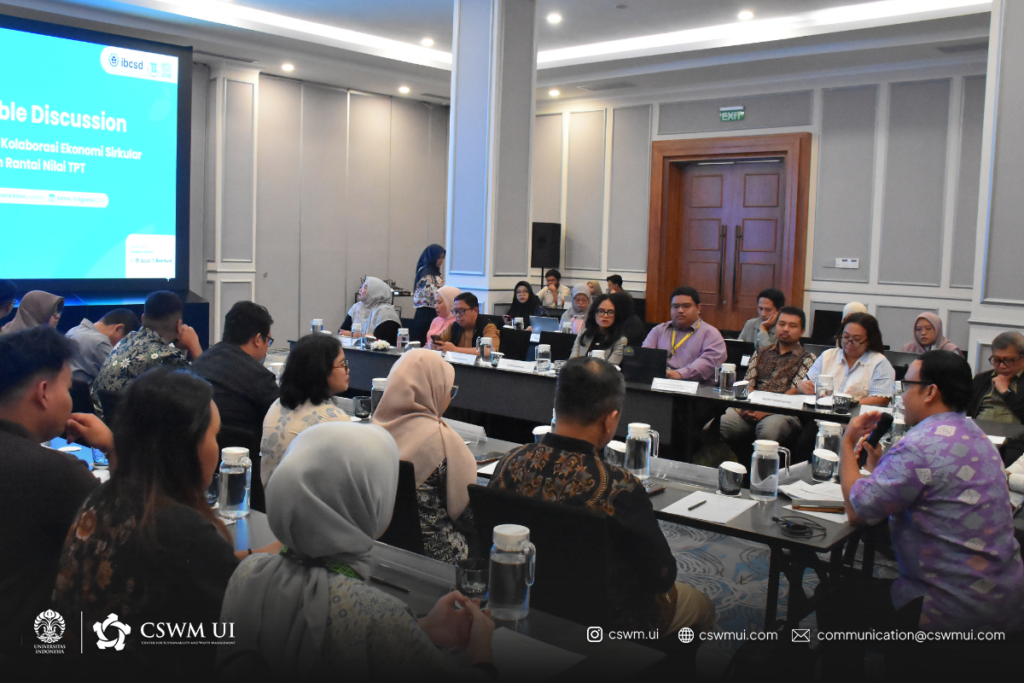
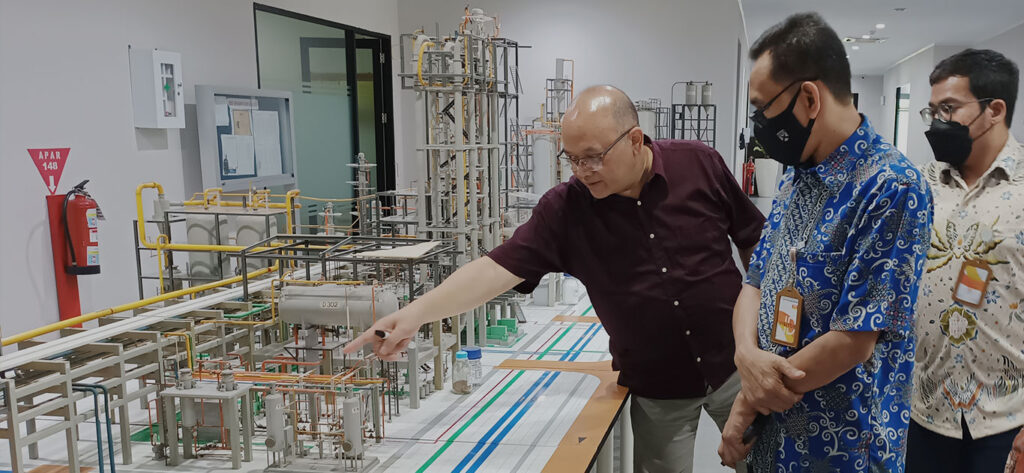
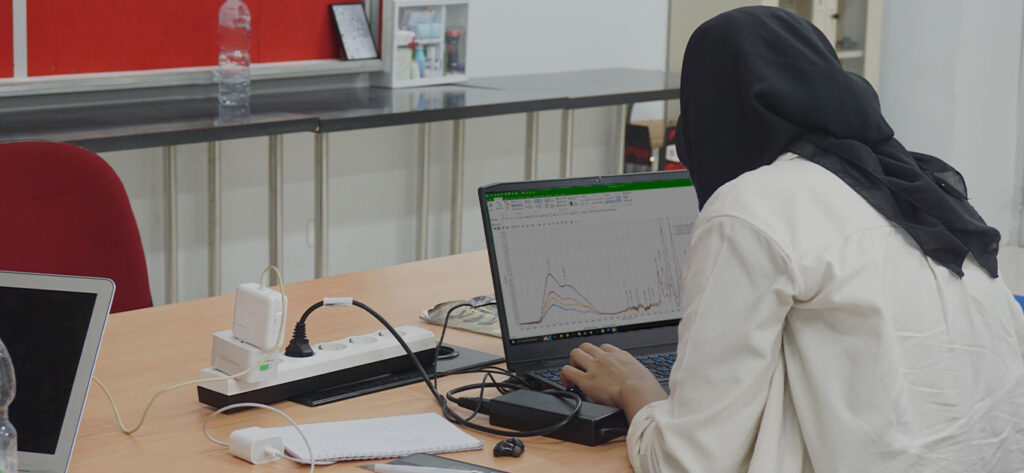
Depok, Indonesia – 16 September 2026 — The Center for Sustainability and Waste Management Universitas Indonesia (CSWM UI), in collaboration with Calia Technology Sdn. Bhd., successfully conducted the Technology Insight Session, an industry-focused knowledge-sharing event designed to strengthen understanding of advanced packaging technologies, quality assurance, and performance evaluation solutions.
Held at Universitas Indonesia, the session brought together professionals from the packaging, manufacturing, quality control, research and development, and related industries to explore emerging approaches in enhancing packaging performance, improving product quality, and optimizing shelf-life through advanced testing and analytical solutions.
With the growing complexity of modern packaging demands, the session highlighted the importance of understanding packaging materials, performance characteristics, and evaluation methods to support industries in developing more reliable and efficient packaging systems. Key topics discussed during the event included Modified Atmosphere Packaging (MAP), Oxygen and Water Vapour Permeability analysis, package integrity evaluation, leak detection, gas analysis, and packaging performance assessment.
Through expert-led presentations and technical discussions, participants gained insights into the role of advanced testing technologies in addressing industrial challenges, particularly in ensuring product protection, maintaining quality consistency, and improving overall packaging reliability.
The session featured technical contributions from experts representing Calia Technology Sdn. Bhd., AMETEK MOCON, and Dansensor, who shared perspectives on packaging testing methodologies, technology applications, and industry practices related to packaging performance evaluation.
Throughout the event, participants actively engaged in discussions surrounding real-world challenges faced by industries, including barrier performance requirements, packaging integrity issues, shelf-life considerations, and the selection of appropriate testing approaches for different applications.
Highlighting the importance of collaboration in advancing packaging innovation, Adam Febriyanto, Ph.D., Vice Principal of CSWM UI, stated:
“The advancement of packaging materials and their increasing potential bring not only new opportunities but also more complex challenges. Therefore, continuous and sustainable collaboration among stakeholders is essential to bridge knowledge, technology, and practical implementation toward a more sustainable future together.”
The discussion emphasized that innovation in packaging technology requires collaboration among academia, industry players, technology providers, and other stakeholders to ensure that technological advancements can be translated into practical solutions that address current and future challenges.
The collaboration between CSWM UI and Calia Technology Sdn. Bhd. reflects a shared commitment to fostering knowledge exchange, strengthening industry engagement, and supporting organizations through access to expertise, technology insights, and technical solutions. Beyond the event, further discussions and technical consultations remain open to support participants in exploring potential solutions for their specific packaging and testing needs.
The Technology Insight Session marks another step in strengthening the connection between academia, industry, and technology providers in developing future-ready solutions for packaging performance, quality improvement, and sustainable innovation.