Depok, 7 May 2026 — Prof. Dr. Ir. Mochamad Chalid, S.Si., M.Sc.Eng., through the Center for Sustainability and Waste Management Universitas Indonesia (CSWM UI), initiated the Merdeka Sampah: Institutional Transformation Towards Zero Waste in Educational Institutions program under the World Class University (WCU) grant, aimed at advancing waste management in schools and campuses towards zero waste. In its implementation, the program collaborates with CSWM UI to develop a zero waste pilot model that is systematic, educational, and sustainable.
This initiative is also part of community service within the Faculty of Engineering at Universitas Indonesia, demonstrating tangible academic collaboration in fostering behavioral change and an environmental awareness culture through foundational education. Through a series of training sessions and Focus Group Discussions, the program encourages schools and campuses not only to serve as formal learning spaces but also as practical grounds for sustainability.

Organic Day: Practical Training on Organic Waste Management Using Takakura and Eco-Enzyme
The Merdeka Sampah program is conducted in two main sessions. The first session, Organic Day, held on 18 April 2026, focused on practical training for organic waste management using the Takakura method and eco-enzyme. This session involved more than 20 teachers and international students, enhancing hands-on capacity to reduce and manage organic waste within schools, campuses, and homes.
During this session, Adam Febriyanto Nugraha, Ph.D., as part of UI and CSWM UI’s academic team, provided insights on the current challenges of waste generation across educational institutions and communities. He also introduced the concept of the snowball effect as a catalyst for change, illustrating how small changes initiated by individuals, teachers, schools, and communities can grow into broader movements that foster a zero-waste mindset.

FGD on Educational Institution Waste Management Roadmap
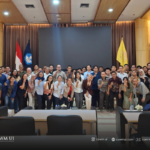
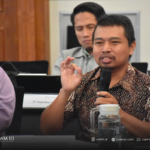
The second session was held through a Focus Group Discussion (FGD) on the Waste Management Roadmap for Educational Institutions at Wisma Makara, Universitas Indonesia. This forum provided an initial platform to build collective commitment among Prof. Mochamad Chalid, CSWM UI, representatives of Muhammadiyah educational institutions, international students, and facilitators to formulate structured and actionable waste management strategies.
The Merdeka Sampah program emphasizes seven sustainability aspects: leadership, awareness, facility, regulation, technology, organizing, and financial. This approach highlights that effective waste management in schools and campuses requires not only facilities and technology but also leadership, behavioral change, governance, and collective commitment from all members of the institution.

Teachers as Drivers of Waste Management Culture
“Teachers play a critical role as drivers of education. Through this program, good waste management habits are expected to grow within schools, be implemented at home, and evolve into a shared culture within families and communities,” said Prof. Mochamad Chalid.
Through these activities, each institution is encouraged to identify current conditions, key challenges, improvement opportunities, and realistic priority actions, including waste reduction, waste separation at the source, and organic waste processing. The roadmap developed is intended as an initial guide to strengthen waste management systems, from habit changes and facility enhancement to data system development and the potential creation of environmentally-based educational zones.
This initiative is expected to serve as a model for good waste management practices in educational institutions, which can be replicated across schools, campuses, and other educational sectors. The program also contributes to advancing SDG 3: Good Health and Well-being and SDG 12: Responsible Consumption and Production, particularly through the reinforcement of waste governance in educational settings.